Home/Non-Fiction/Books Like Four Thousand Weeks
The reading map

Books like
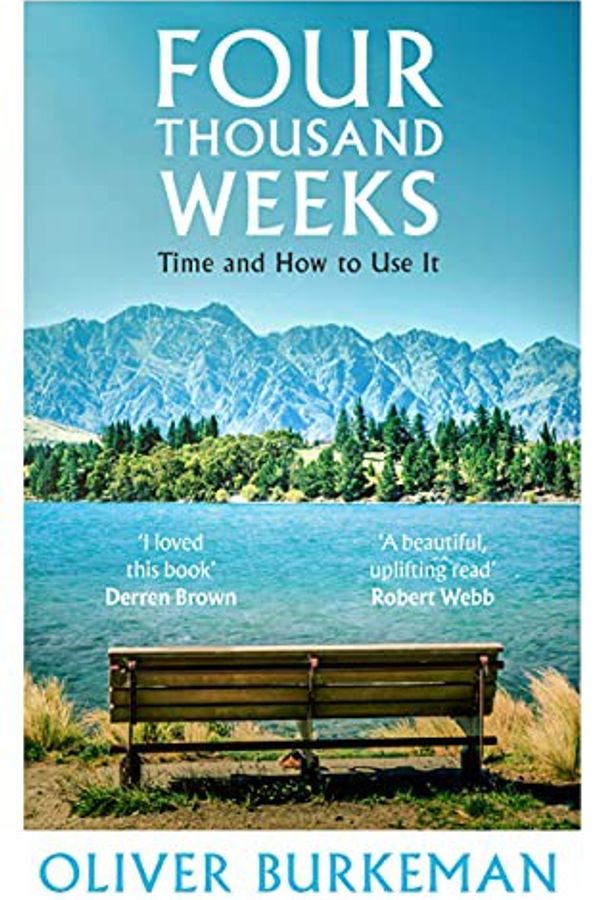
Four Thousand Weeks

Books that share attention reclamation, acceptance of limits, and anti-optimization philosophy with Four Thousand Weeks.

15
Picks
Rhett Callahan
Curated by
Jul 2026
Updated

The essential companions

01
Match82%
Meditations cover

Meditations

179
Year
158
Pages
Philosophy
Genre
But diverges

Ancient Stoic aphorisms replace modern psychology.

Marcus Aurelius wrote Meditations as a private journal while governing the Roman Empire, and the result reads like Four Thousand Weeks stripped down to its studs. Both books wrestle with the same core tension: you have limited time, the world will not cooperate with your plans, and the only real power you hold is over your own attention and response.

02
Match86%
Essentialism cover

Essentialism

2013
Year
260
Pages
Philosophy
Genre
But diverges

The book delivers a practical playbook rather than a philosophy.

Greg McKeown's Essentialism tackles the same problem Burkeman identifies, that we try to do everything, but approaches it as a practical framework rather than a philosophical argument. McKeown introduces the concept of the disciplined pursuit of less, a systematic method for identifying what actually matters and eliminating the rest. While Burkeman wants you to accept your limitations philosophically, McKeown gives you a playbook for acting on that acceptance in your work and personal life.

AI Suggestions

None of these quite right?

Hand us a few books you’ve loved and we’ll surface ten matches in seconds, with reasoning, not just covers.

Try AI Suggestions
Free · 30 seconds · No signup
readalikes.com/ai-book-recommender
Readalikes AI recommender results on desktop
Readalikes AI recommender on mobile
03
Match85%
How to Do Nothing cover

How to Do Nothing

2018
Year
256
Pages
Philosophy
Genre
But diverges

The lens focuses on attention and bioregionalism, not mortality.

Jenny Odell's How to Do Nothing shares Burkeman's suspicion that the attention economy is stealing something essential from human experience, but she takes the argument in a distinctly artistic and ecological direction. Where Burkeman focuses on time, Odell focuses on attention itself, arguing that the constant demand to be productive or engaged online erodes our ability to notice the world around us. She draws on bioregionalism, art history, and her own practice of bird watching to build a case for strategic withdrawal from the attention marketplace.

04
Match89%
The Antidote cover

The Antidote

2011
Year
256
Pages
Non-Fiction
Genre
But diverges

The focus is negative thinking rather than finite time.

Oliver Burkeman's earlier book The Antidote serves as a prequel to Four Thousand Weeks, laying the philosophical groundwork that the later book builds on. Here, Burkeman investigates what he calls the negative path to happiness: the idea that trying to think positively and avoid failure actually increases anxiety. He visits a Stoic philosopher, attends a bankruptcy convention, travels to a self-help seminar that teaches failure, and experiments with Buddhist meditation.

05
Match74%
When cover

When

2017
Year
272
Pages
Fantasy
Genre
But diverges

Daily timing research replaces existential reflection on mortality.

Daniel Pink's When applies scientific research to a question most people ignore: not what to do or how to do it, but when to do it. The book breaks down the science of timing across daily rhythms, beginnings, midpoints, and endings, showing that when you schedule a task matters as much as the task itself. While the subject seems tactical on the surface, Pink's deeper argument connects to Burkeman's philosophy.

06
Match78%
Stumbling on Happiness cover

Stumbling on Happiness

by Daniel Todd Gilbert
2005
Year
310
Pages
Non-Fiction
Genre
But diverges

Predictive psychology replaces Burkeman's existential framing.

Daniel Gilbert's Stumbling on Happiness is a psychology book about why humans are terrible at predicting what will make them happy, and it shares surprising DNA with Four Thousand Weeks. Both books argue that our mental models of the future are deeply flawed, and that acting on those flawed predictions leads to wasted effort and misplaced priorities. Gilbert, a Harvard psychologist, walks through decades of research showing that the human imagination systematically distorts future scenarios, filling in details that will not exist and omitting ones that will.

07
Match80%
The Paradox of Choice cover

The Paradox of Choice

2003
Year
273
Pages
Non-Fiction
Genre
But diverges

Decision overload, not time scarcity, drives the argument.

Barry Schwartz's The Paradox of Choice examines why having more options makes us less satisfied, a finding that runs directly parallel to Burkeman's argument about time. Burkeman says you cannot do everything with your four thousand weeks; Schwartz says you cannot have everything from an infinite menu of choices. Both writers trace modern dissatisfaction to the same root: the illusion that with enough effort, you can optimize your way to the perfect outcome.

08
Match86%
Deep Work cover

Deep Work

2016
Year
190
Pages
Self-Help
Genre
But diverges

Career-skill framing replaces a mortality-first argument.

Cal Newport's Deep Work is the book Four Thousand Weeks readers reach for when they want a more career-shaped version of the same attention thesis. Newport, a Georgetown computer-science professor, argues that the ability to focus without distraction on hard cognitive work is becoming rare and economically valuable. The first half is the case.

09
Match82%
Bullshit Jobs cover

Bullshit Jobs

2017
Year
368
Pages
Non-Fiction
Genre
But diverges

Anthropology of meaningless labor replaces personal-time philosophy.

David Graeber's Bullshit Jobs is the book Four Thousand Weeks readers want next when they finish Burkeman and start asking why their actual job feels so weightless. Graeber, the late LSE anthropologist, expanded a viral 2013 essay into a book-length case that a large fraction of contemporary white-collar work is, by the workers' own admission, pointless.

10
Match78%
The Power of Now cover

The Power of Now

1996
Year
224
Pages
Self-Help
Genre
But diverges

Spiritual-teacher voice replaces a journalist register.

Eckhart Tolle's The Power of Now is the book Four Thousand Weeks readers either love or politely set aside, and the test is whether you can sit with the spiritual-teacher voice. Tolle, a German-born writer who had a breakdown in his late twenties and emerged with the framework that became the book, argues that most suffering comes from identification with the noisy mind and the time-bound self.

Hidden gem readalikes

Match84%
The Sabbath cover

The Sabbath

1950
Year
118
Pages
Non-Fiction
Genre
But diverges

Jewish theology replaces secular journalist framing.

Abraham Joshua Heschel's The Sabbath is the 100-page theological essay Four Thousand Weeks readers will swallow in one Sunday afternoon and think about for years. Heschel, the Polish-born rabbi who marched with Martin Luther King Jr. and taught at the Jewish Theological Seminary, wrote the book in 1951 as a meditation on the seventh day as a "cathedral in time.

Match80%
Lost in Thought cover

Lost in Thought

2019
Year
240
Pages
Non-Fiction
Genre
But diverges

Liberal-arts defense replaces personal-time philosophy.

Zena Hitz's Lost in Thought is the book Four Thousand Weeks readers find when they start asking what attention is actually for once they have it back. Hitz, a tutor at St. John's College in Annapolis, walked away from a tenured-track research career to take vows in a Catholic religious community, then returned to teaching the great books.

Match78%
In Praise of Idleness cover

In Praise of Idleness

1934
Year
231
Pages
Non-Fiction
Genre
But diverges

1932 economic argument replaces a 2021 attention frame.

Bertrand Russell's In Praise of Idleness is the 1932 essay Four Thousand Weeks readers will read in 30 minutes and quote for decades. Russell argues that the world should work a four-hour day, that the cult of work is a hangover from a pre-industrial economy that no longer exists, and that civilization itself depends on people having free time to pursue inquiry, art, and friendship.

New release readalikes

Match84%
Slow Productivity cover

Slow Productivity

2023
Year
256
Pages
Non-Fiction
Genre
But diverges

Career-craft frame replaces a mortality-first argument.

Cal Newport's Slow Productivity, released March 2024, is the book Four Thousand Weeks readers picked up the week it landed. Newport argues that the contemporary definition of knowledge-work productivity is broken, treating busyness as a proxy for output, and offers three counter-tenets: do fewer things, work at a natural pace, and obsess over the quality of your work.

Match80%
The Good Enough Life

The Good Enough Life

—
Year
—
Pages
Non-Fiction
Genre
But diverges

Political-philosophy register replaces personal-time framing.

Avram Alpert's The Good Enough Life, released March 2022 from Princeton University Press, is the book Four Thousand Weeks readers want when they finish Burkeman and start asking whether the whole culture of greatness is the problem. Alpert, a Princeton-trained philosopher, draws on D.W.

Why are these books similar to Four Thousand Weeks?

These recommendations were chosen because they each confront the same uncomfortable truth that powers Oliver Burkeman's book: you will not live long enough to do everything, and pretending otherwise is the source of most modern anxiety. Four Thousand Weeks argues that accepting your limitations is not defeat but liberation, and every title on this list approaches that argument from a different philosophical tradition, whether Stoic, Buddhist, or simply human.

The list includes ancient meditations on mortality and self-governance written from the seat of Roman imperial power alongside modern psychology and philosophy, all circling the same question Burkeman poses: what does it mean to use your time well when there will never be enough of it?

This list is shaped for readers who want books similar to Four Thousand Weeks that do not promise productivity hacks or time management tricks, but instead ask you to sit with the finite nature of your life and decide what genuinely matters.

O
The author
Oliver Burkeman
Explore more books
Get AI picks